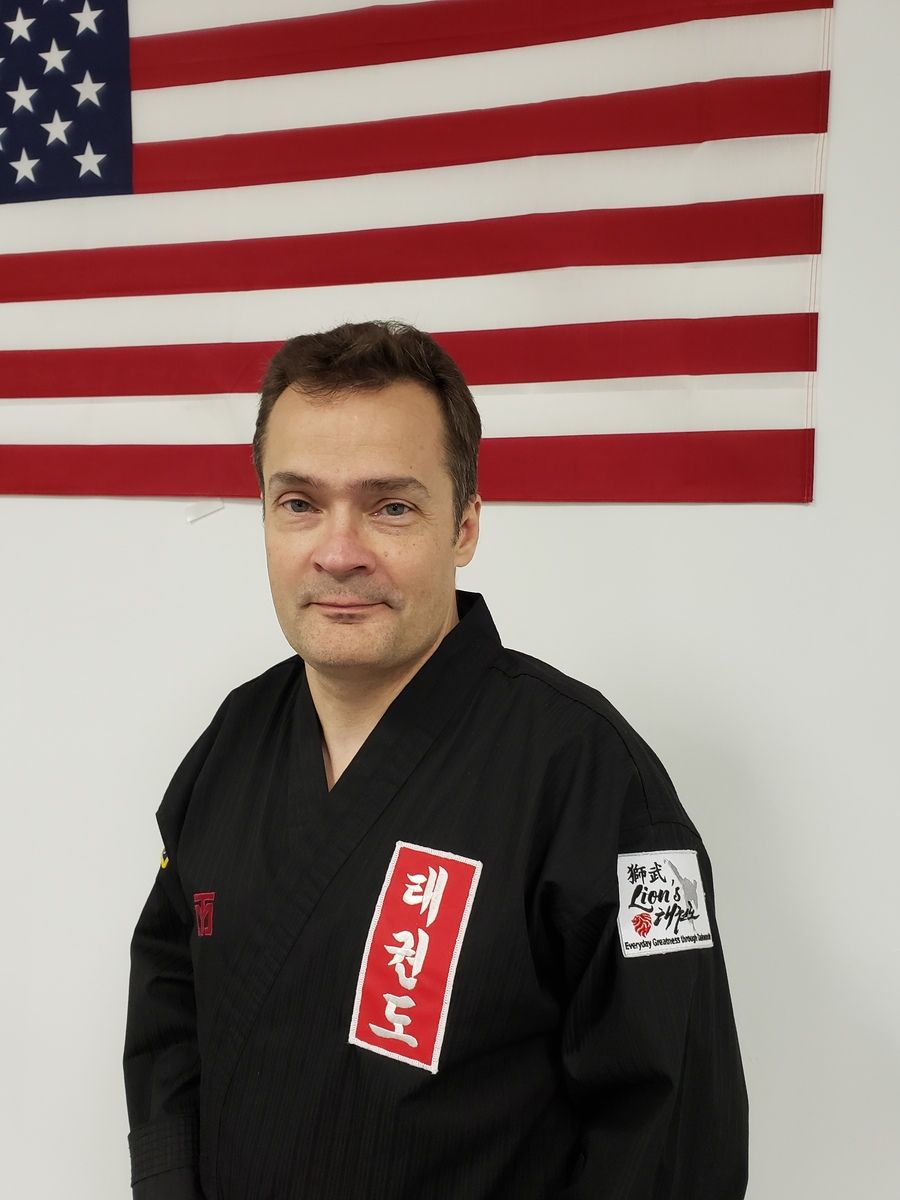
Hi and welcome,
I'm Master Frank, owner of Lions Panzek Martial Arts in Winfield, Illinois.
There's a phrase children learn surprisingly early:
"I can do it myself."
If you've ever tried to help a small child put on their own shoes, open a stubborn package, pour their own drink, or do almost anything when you're already five minutes late, you've probably heard it.
And honestly, that's a good thing.
We want children to become independent.
We want them to solve problems.
We want them to develop confidence in their own abilities.
But there's another phrase that's just as important:
"I need help."
For some children, those three words are much harder to say.
We Sometimes Confuse Help With Failure
A student is struggling with a form.
They can't remember what comes next.
I can see the wheels turning.
They know they're stuck.
I know they're stuck.
The student standing next to them probably knows they're stuck.
But instead of asking for help, they'll sometimes stand there trying to reconstruct the entire form through sheer force of will.
I've seen some very creative new forms invented this way.
Eventually I'll ask:
"Do you need some help?"
And almost immediately:
"Yes."
So why didn't they ask?
Sometimes children believe asking for help means admitting they can't do something.
We want to teach them something different.
Asking for help means you want to learn how to do it.
That's not weakness.
That's maturity.
Independence Doesn't Mean Doing Everything Alone
We spend a lot of time encouraging children to become independent.
That's important.
But true independence doesn't mean never needing anyone.
Adults ask for help all the time.
We call a mechanic when the car makes a noise it definitely shouldn't be making.
We ask an accountant about taxes.
We call someone who knows how to fix the thing we attempted to fix ourselves before realizing we may have made the thing significantly less fixed, and as a result more expensive to fix correctly HAHA.
Knowing your limits is part of being capable.
Children need to learn that too.
There Are Different Kinds of Help
Sometimes a child needs help because they don't understand something.
Sometimes they need help because something feels overwhelming.
Sometimes they need help because another person is treating them badly.
Sometimes they simply need someone to listen.
Those situations require different kinds of help, but they all begin with the same skill:
Recognizing that I don't have to handle this alone.
That's especially important as children get older.
We want them to know there are trusted adults they can go to when something doesn't feel right.
A parent.
A teacher.
A coach.
An instructor.
Asking for help early can keep a small problem from becoming a much bigger one.
What This Looks Like in the Dojang
Martial arts creates plenty of opportunities to practice asking for help.
A student forgets part of a form.
They don't understand a technique.
Their sparring equipment doesn't feel right.
Something hurts.
They're nervous about an activity.
We want students to learn that speaking up is appropriate.
Sometimes the strongest thing a student can say is:
"Can you show me again?"
Or:
"I don't understand."
Or:
"I'm not comfortable with this."
Those aren't excuses.
They're communication.
And good communication is part of good martial arts.
But Asking Isn't the Same as Escaping
There's an important balance here.
We don't want children asking for help every time something becomes slightly difficult.
If a student can solve the problem themselves, we want to give them the opportunity.
Sometimes my response to a request for help is:
"Show me what you've tried first."
That tells me quite a bit.
Did they make an effort?
Where did they get stuck?
What do they already understand?
Then I can give them just enough help to move forward without doing the work for them.
That's the goal.
Support without taking over.
A Simple Question for Parents
The next time your child asks for help, instead of immediately solving the problem, try asking:
"What part do you need help with?"
That's a powerful question.
It makes the child think.
Maybe they don't need you to do the entire math problem.
They just don't understand one step.
Maybe they don't need you to solve a disagreement with a friend.
They need help figuring out what to say.
Maybe they don't need you to tie their belt.
They just need help remembering how to start.
Now you're helping them while still allowing them to own the solution.
And Sometimes We Need to Ask First
Not every child will tell us when they need help.
Some children are naturally quiet.
Some don't want to disappoint anyone.
Some communicate differently.
Some simply don't have the words yet.
That's why the adults in their lives need to pay attention too.
Sometimes a simple:
"Do you want some help?"
opens a door.
And sometimes the answer will be no.
That's okay too.
Knowing someone is available matters.
A Challenge for This Week
Give your child permission to ask for help.
You can make it as simple as saying:
"You should always try. But you never have to be afraid to ask for help."
Then model it.
Ask your child for help with something.
Ask your spouse.
Ask a coworker.
Let children see that capable adults don't know everything.
This shouldn't be terribly difficult.
Most children already suspect we don't know everything anyway.
Final Thought
Martial arts teaches self-reliance.
We want students to become confident.
Capable.
Independent.
Able to handle difficult situations.
But strength has never meant doing everything alone.
Real confidence includes knowing what you can handle yourself...
and recognizing when you need someone beside you.
One day, the words "I need help" might mean a student needs assistance remembering a form.
Another day, those same words could be much more important.
So let's make sure our children know how to say them.
And let's make sure they know there will always be someone willing to listen.
See you on the mat,
Master Frank
Lions Panzek Martial Arts
27W239 Geneva Rd.
Winfield, IL 60190
(630) 797-6698
www.panzek.com
One More Week to Start the School Year Strong
Our Confidence is the Best School Supply™ Back-to-School Special ends August 31.
New students receive:
🥋 2 Weeks of Martial Arts Classes FREE
🥋 FREE Uniform
Martial arts gives children a place to practice confidence, communication, focus, discipline, respect, and independence—with instructors there to help when they need it.
Beginner friendly programs for ages 3&4, ages 5+, and adults.
We also offer dedicated instruction for individuals with special needs.