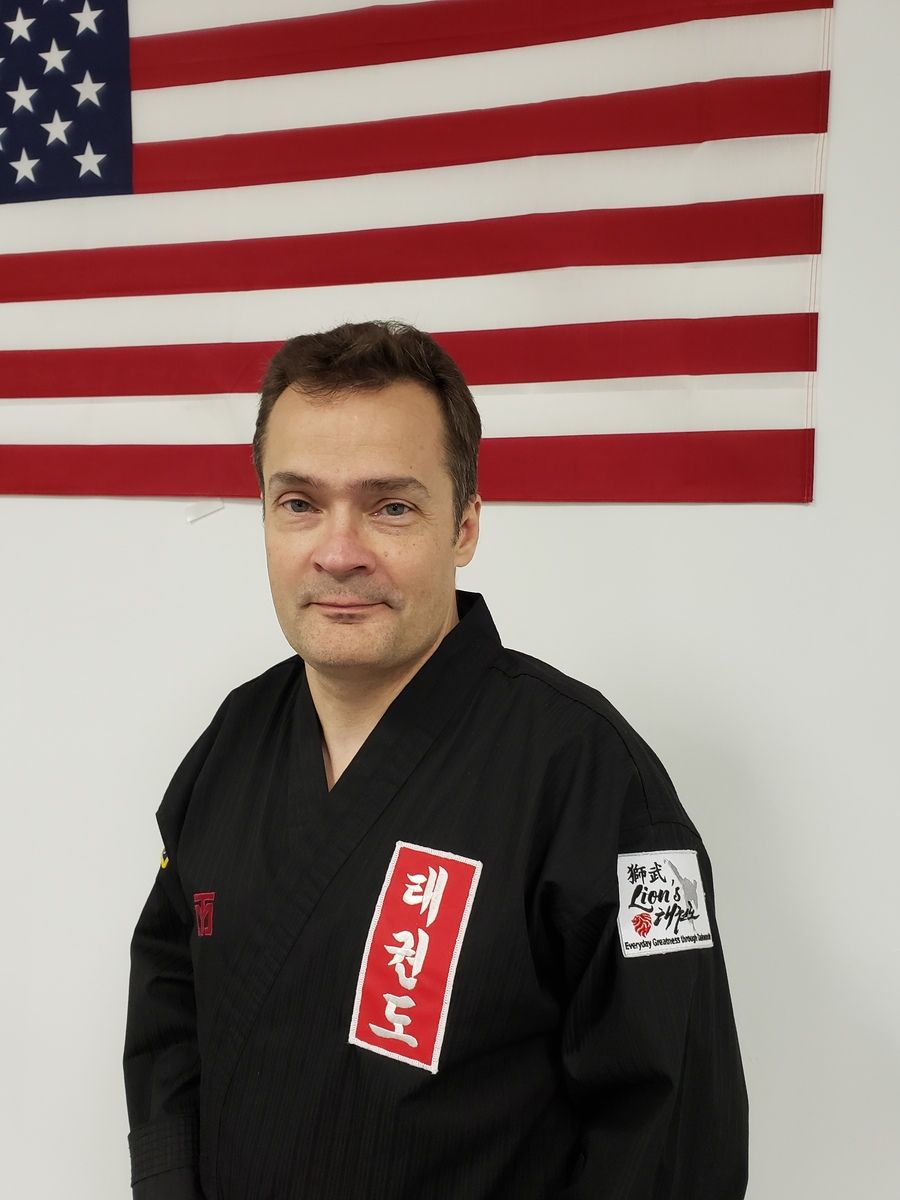
Hi and welcome,
I'm Master Frank, owner of Lions Panzek Martial Arts in Winfield, Illinois.
Every child loves winning.
Come to think of it, most adults seem pretty fond of it too.
Winning feels good.
You worked hard.
You succeeded.
Maybe you earned a trophy, scored the point, broke the board, or finally beat your dad at whatever game he insists he was definitely not letting you win before.
But eventually something else happens.
You lose.
And that's when I sometimes learn more about a student than I do when they're winning.
Because winning shows me what a student can do.
Losing shows me how they handle what they can't control.
Nobody Likes Losing
Let's get something out of the way first.
I don't expect children to enjoy losing.
I certainly didn't develop a martial arts program around the exciting promise of:
"Come experience disappointment!"
It's okay to be disappointed (did you watch that Bears game???).
It's okay to wish you had won (see comment above HAHA).
It's okay to feel frustrated when you practiced hard and things still didn't go your way.
Those feelings aren't the problem.
What matters is what happens next.
Do we make excuses?
Blame somebody?
Quit?
Refuse to congratulate the winner?
Or can we be disappointed, take a breath, show respect, and learn something?
That's where the lesson is.
The Bow Matters Most After the Match
Martial arts has a tradition I love.
We bow.
Before we train together, we bow.
After we train together, we bow.
In competition, we show respect before and after the match.
It's easy to bow when you won.
Try doing it immediately after you lost.
Now the bow means something.
It says:
"I wanted to win. I didn't. And I still respect you."
That's sportsmanship.
It doesn't require pretending you aren't disappointed.
It requires refusing to let disappointment decide how you treat another person.
Don't Rush to Make Losing Feel Better
This can be difficult for parents.
We love our kids.
When they're hurting, our instinct is to fix it.
"The referee made a bad call."
"You should have won."
"The other kid had an advantage."
Sometimes those things might even be true.
But be careful.
When we immediately explain away every loss, we may accidentally teach children that losing must always be somebody else's fault.
Sometimes the healthiest thing we can say is:
"I know you're disappointed. What do you think you learned?"
Now we're not rescuing them from the feeling.
We're helping them use it.
Winning and Improvement Aren't Always the Same Thing
A student can win and perform poorly.
A student can lose and perform beautifully.
That's important.
Maybe your child lost a sparring match but finally used the combination they've been practicing.
Maybe they didn't win the tournament but performed their form better than they've ever done it.
Maybe they broke two boards while another student broke three.
The scoreboard tells us who won the event.
It doesn't always tell us who grew the most.
That's why I want students to learn to ask:
"What did I do well?"
"What can I improve?"
And then:
"What do I do next?"
That last question matters.
Because one loss should never become the end of the story.
Sometimes Someone Is Simply Better
Here's another lesson children eventually have to learn.
Sometimes you do your best...
and someone else is better.
That's it.
No excuse.
No injustice.
They were better that day.
And that's okay.
Someone else's ability doesn't take anything away from yours.
In fact, training with people who are better than us is one of the fastest ways to improve.
Instead of thinking:
"I can't beat them."
Try:
"What can I learn from them?"
Now the person who beat you just became one of your teachers.
That's a pretty good return on a loss.
Losing Well Does NOT Mean Lowering Expectations
I don't want students becoming comfortable with poor effort.
There's a difference between accepting a loss and accepting mediocrity.
We still practice.
We still prepare.
We still try to win.
We still pursue excellence.
If something didn't work, we fix it.
If we weren't prepared, we prepare better.
If someone outworked us, maybe we need to work harder.
Good sportsmanship isn't saying:
"I don't care whether I win."
It's saying:
"I care very much—and I can still handle myself appropriately if I don't."
That's strength.
Every Victory Looks Different
This lesson is especially important in an inclusive martial arts program.
Competition doesn't have to mean comparing every student by exactly the same measure.
For one student, victory may be earning first place.
For another, it may be performing in front of people for the first time.
For another, simply participating in an unfamiliar environment may represent tremendous growth.
We can pursue excellence while recognizing that progress looks different for different people.
The goal isn't to lower the bar.
It's to make sure we're measuring the right bar.
The Car Ride Home
Parents, here's a challenge.
The next time your child competes, tests, plays a game, or experiences some kind of loss, pay attention to the first conversation afterward.
Instead of:
"Why didn't you...?"
Or:
"You should have..."
Try:
"I loved watching you compete."
Then give them a little time.
Later, ask:
"What are you proud of?"
"What did you learn?"
"What do you want to work on next?"
Those three questions turn a disappointing result into a plan.
And plans move us forward.
Final Thought
Our children are going to lose things.
Games.
Competitions.
Opportunities.
Arguments.
Jobs.
Relationships.
There will be moments when they work incredibly hard and still don't get the outcome they wanted.
We cannot protect them from all of that.
And I don't think we should try.
What we can do is prepare them.
Teach them to shake hands.
Bow.
Congratulate someone else.
Learn.
Go home.
Practice.
Come back.
Because one of the most valuable things martial arts can teach a child isn't how to win.
It's this:
Losing doesn't make you a loser.
How you respond determines what happens next.
And sometimes today's loss becomes the lesson that creates tomorrow's victory.
See you on the mat,
Master Frank
Lions Panzek Martial Arts
27W239 Geneva Rd.
Winfield, IL 60190
(630) 797-6698
www.panzek.com
🥋 September Is Almost Over
We're heading into the final stretch of September, but there's still time to get started at Lions Panzek Martial Arts.
Our $49 September Special gives new students the opportunity to experience martial arts and discover what they can accomplish.
Because we're not just teaching kicks, punches, and forms.
We're helping students learn how to:
🥋 Win with humility
🥋 Lose with grace
🥋 Handle disappointment
🥋 Keep working when something is difficult
🥋 Respect others
🥋 Believe in their ability to improve
We offer programs for children, adults, and individuals with special needs in a welcoming environment where every student has the opportunity to grow.
$49 September Special — available through September 30.
👉 Ready to get started? CLICK HERE
Helping to make you the best you possible.