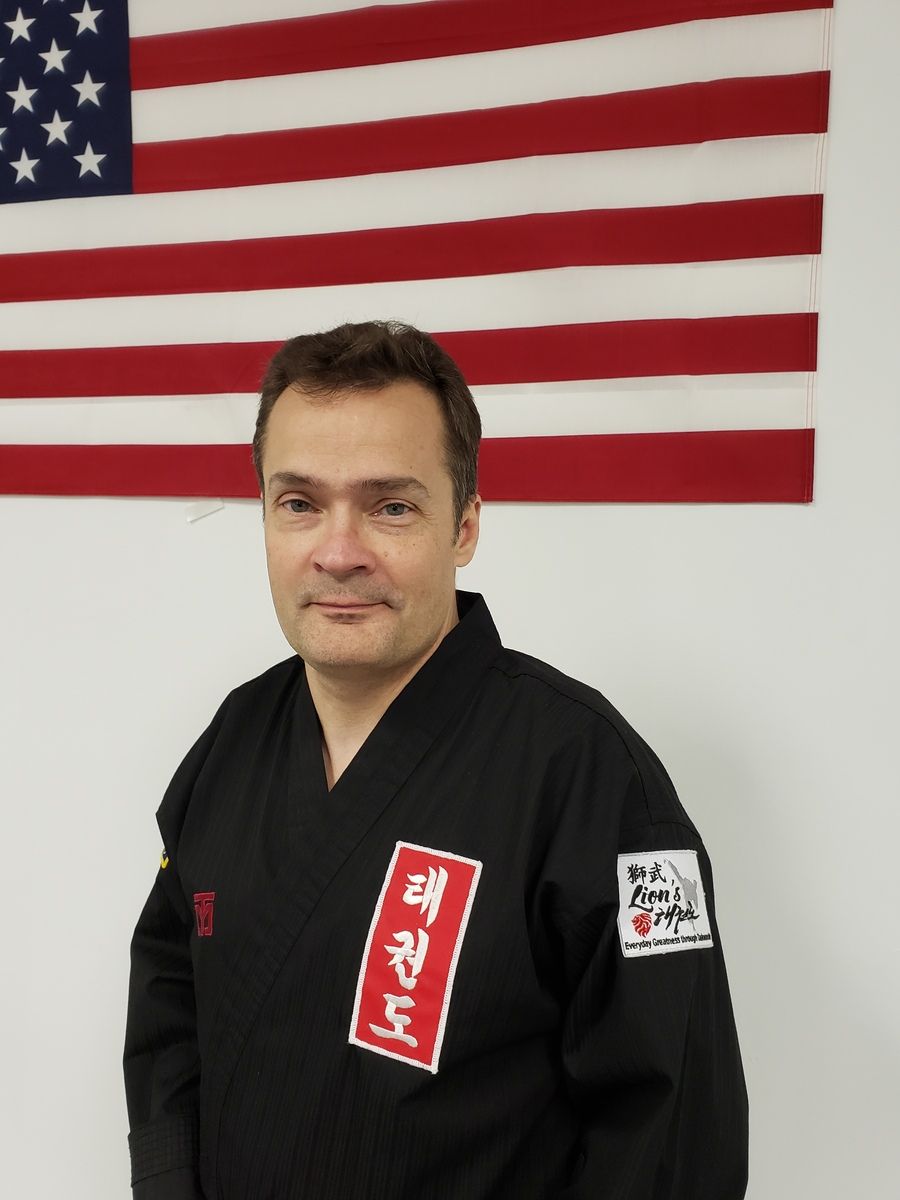
Hi and welcome,
I'm Master Frank, owner of Lions Panzek Martial Arts in Winfield, Illinois.
Have you ever watched a child's entire day fall apart because something didn't go according to plan?
Maybe their friend couldn't come over.
Maybe the family outing got canceled.
Maybe the restaurant was out of chicken nuggets.
Apparently, this last one can occasionally qualify as a national emergency.
Whatever the situation, the reaction can sometimes seem a little bigger than the problem.
But here's the thing.
Children like knowing what's going to happen.
Actually, adults do too.
We make plans.
We establish routines.
We develop expectations.
And then life comes along and says:
"That's a nice plan you've got there."
And changes everything.
One of the most valuable skills we can teach children is learning how to handle those moments.
Because sometimes Plan A simply isn't going to happen.
And that's okay.
Plan B is still a plan.
Why Change Can Be So Difficult
Think about how much of a child's world is controlled by other people.
Adults decide when they go to school.
What time they eat.
Where they're going.
When they have to leave.
What activities they're doing.
Children don't always have much control over those decisions.
So when they finally have something they're looking forward to, that plan can become pretty important.
And when it changes?
Disappointment.
Frustration.
Sometimes anger.
Sometimes tears.
Those reactions don't necessarily mean a child is being difficult.
Sometimes they simply haven't developed the skills to adjust their expectations.
And that's something we can help them learn.
Martial Arts Doesn't Always Follow the Script
We have structure in martial arts.
We bow.
We warm up.
We practice techniques.
We work on forms.
We train with partners.
There's a reason for that structure.
It helps students know what's expected and creates an environment where they can learn.
But not everything goes according to plan.
Sometimes a student's usual training partner isn't there.
Sometimes we're working on a technique and discover that the approach we planned doesn't work particularly well.
Sometimes a student needs a different way to learn something.
And sometimes the instructor changes the activity.
Yes, even Master Frank has been known to change his mind occasionally.
I understand this may come as a shock.
But those moments create opportunities to practice something important.
Adapting.
The Difference Between a Goal and a Plan
Here's something I want students to understand.
A goal and a plan aren't the same thing.
The goal might be to improve a particular kick.
The plan might be to practice it with a partner holding a target.
But what if that partner isn't available?
Does that mean we can't improve the kick?
Of course not.
We might practice balance.
Work on chambering the knee.
Practice the movement slowly.
Use a different target.
The plan changed.
The goal didn't.
That's an important distinction.
Sometimes children become so focused on how something was supposed to happen that they lose sight of what they were trying to accomplish in the first place.
Learning to separate the goal from the plan gives them options.
And options are powerful.
Flexibility Doesn't Mean Giving Up
Now, I want to make something clear.
Being flexible doesn't mean we abandon our goals whenever things become inconvenient.
Quite the opposite.
Sometimes flexibility is what allows us to keep going.
Imagine a student working toward their next belt.
They've been practicing.
They're making progress.
Then something interrupts their routine.
Maybe they miss a few classes.
Maybe they need extra time to master a technique.
Maybe something simply takes longer than expected.
The goal is still there.
But the original timeline might need to change.
That's not failure.
That's adjusting.
A strong martial artist knows when to stay the course and when to change the approach.
That lesson applies to school, relationships, work, and just about everything else life throws at us.
Some Children Need More Help With Change
This is especially important in an inclusive martial arts environment.
Not every child handles unexpected changes the same way.
For some students, a change in routine is a minor inconvenience.
For others, particularly those who rely heavily on predictability, it can be genuinely overwhelming.
And that's okay.
We don't help those students by constantly surprising them and expecting them to get used to it.
We help by giving them tools.
Advance notice when possible.
Clear explanations.
Visual schedules.
Simple choices.
Extra processing time.
A chance to take a break when needed.
The goal isn't to make every child comfortable with every change.
The goal is to help each child develop the ability to handle changes in a way that works for them.
Sometimes that takes patience.
Sometimes it takes creativity.
And sometimes it takes changing our own plans as instructors.
Imagine that.
The adults have to be flexible too.
Don't Rush to Fix Every Disappointment
Here's where parents can make a difference.
When something doesn't go according to plan, our first instinct is often to fix it.
The playdate gets canceled?
Find another friend.
The restaurant is closed?
Find somewhere else immediately.
The activity isn't available?
Come up with a replacement before the child even has time to be disappointed.
I understand the instinct.
Nobody enjoys seeing their child upset.
But sometimes we move so quickly to eliminate disappointment that children never get the opportunity to practice handling it.
Instead, try acknowledging the feeling.
"I know you were really looking forward to that."
Then give them a moment.
Afterward, ask:
"Okay, what's our Plan B?"
Now we're doing something different.
We're inviting the child to participate in solving the problem.
That's a skill worth developing.
Give Them a Little Control
One reason changes can be difficult is that children feel they've lost control.
Offering appropriate choices can help.
For example:
"We can't go to the park because it's raining. Would you rather play a game inside or work on something together?"
The original plan isn't available.
But the child still gets to make a decision.
This doesn't mean every situation needs to become a negotiation.
Sometimes there simply aren't any choices.
But when choices are available, allowing children to participate can help them practice adapting without feeling completely powerless.
A Simple Family Challenge
Here's something you can try this week.
Pick a small, low-pressure activity.
Maybe it's a family game.
Maybe it's making dinner.
Maybe it's deciding what to do on a Saturday afternoon.
Come up with a Plan A.
Then, together, come up with a Plan B.
Not because you expect something to go wrong.
Simply because you're practicing.
You might ask:
"If we can't do this, what else could we do?"
Let your child help develop the alternative.
And if Plan A works?
Wonderful.
You don't need to manufacture a problem.
The point is helping children understand that having another option doesn't mean the first one failed.
It means we're prepared.
Final Thought
Life has a remarkable ability to ignore our plans.
Things get canceled.
People get sick.
Schedules change.
Opportunities disappear.
Something we worked hard for doesn't happen when or how we expected.
We cannot prepare our children for every possible situation.
But we can help them develop the ability to adjust.
To think.
To consider alternatives.
To recognize that disappointment doesn't have to mean defeat.
Martial arts teaches us to stay focused on our goals while remaining willing to change our approach.
Sometimes the technique needs adjusting.
Sometimes the timing needs adjusting.
Sometimes the entire plan needs adjusting.
And sometimes we discover that the alternative works even better than the original.
So the next time something doesn't go according to plan, remember:
The plan can change without the goal changing.
And when Plan A doesn't work?
Take a moment.
Think.
Adjust.
And remember...
Plan B is still a plan.
See you on the mat,
Master Frank
Lions Panzek Martial Arts
27W239 Geneva Rd.
Winfield, IL 60190
(630) 797-6698
🥋 Helping Children Prepare for Life's Challenges
At Lions Panzek Martial Arts, we believe martial arts is about much more than learning how to kick and punch.
It's about developing the confidence, discipline, focus, respect, and life skills that help students navigate challenges both on and off the mat.
Every student learns differently, and every student deserves an opportunity to succeed.
Our programs include:
🥋 Lion Cubs — Ages 3–4
🥋 Lion Program — Ages 5+
🥋 Dedicated Special Needs Martial Arts Classes
Whether your child is outgoing, shy, energetic, or simply looking for a positive environment to grow, we'd love to help you explore what martial arts can offer.
Interested in learning more about Lions Panzek Martial Arts?
Reach out anytime! We're happy to answer your questions and help you find the right program for your family.
Lions Panzek Martial Arts
27W239 Geneva Rd.
Winfield, IL 60190
📞 (630) 797-6698
🌐 panzek.com
Helping to make you the best you possible.