Hi and welcome,
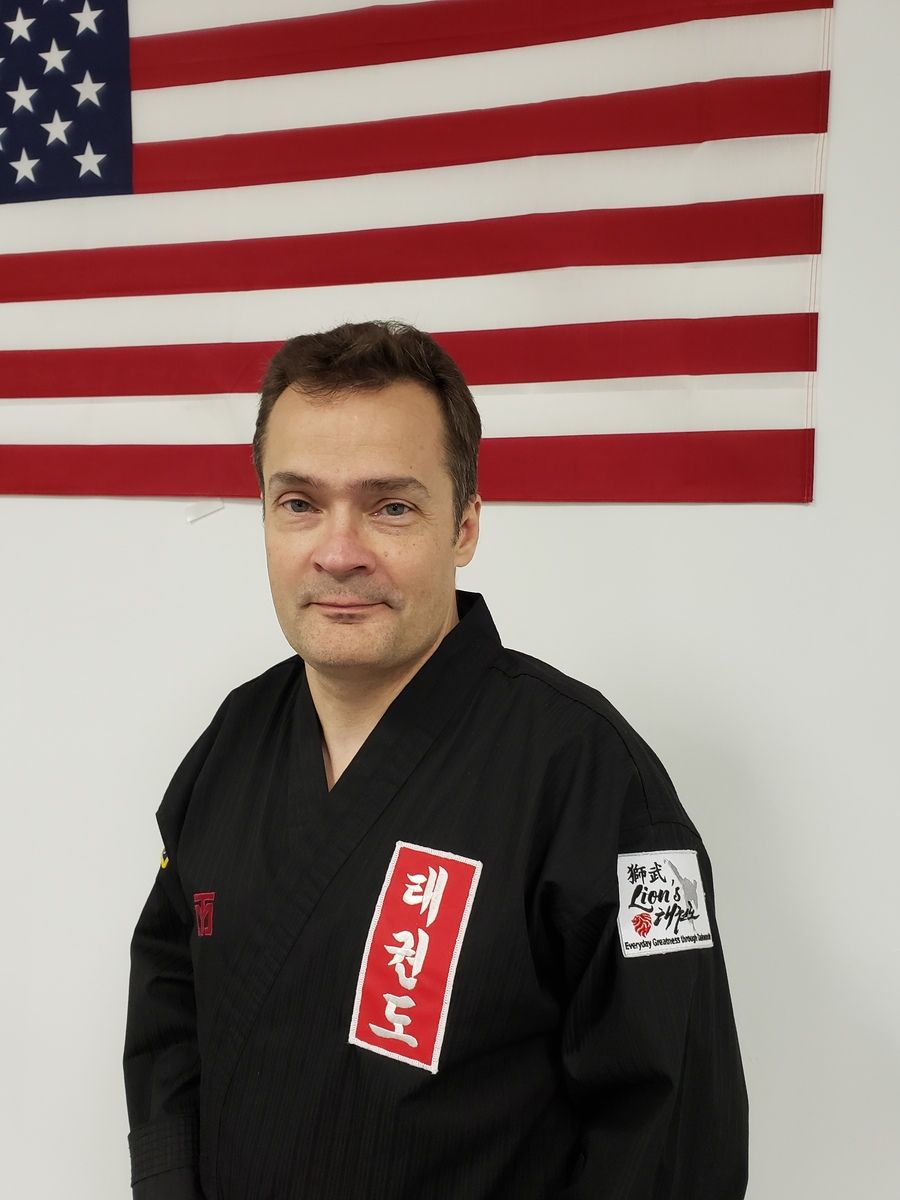
I'm Master Frank, owner of Lions Panzek Martial Arts in Winfield, Illinois.
There are certain phrases every parent and teacher hears eventually.
“But he started it!”
“She made me do it!”
“Nobody told me!”
And, of course, the undefeated champion:
“But it wasn't my fault!”
Sometimes that's an excuse.
But here's the tricky part.
Sometimes...
it really wasn't their fault.
Someone bumped into them.
Another child did start it.
The instructions weren't clear.
Something happened that was completely outside their control.
So what do we teach then?
I think the answer begins by separating two things that sound similar but aren't:
Fault and responsibility.
They Aren't the Same Thing
Fault asks:
“Who caused this?”
Responsibility asks:
“What am I going to do now?”
Those are very different questions.
Imagine a student arrives at martial arts and discovers their water bottle leaked all over their uniform.
Did they intentionally make the bottle leak?
Probably not.
Is standing there announcing “It's not my fault!” going to dry the uniform?
Also probably not.
The useful question becomes:
“Okay. What do we do next?”
That's where responsibility begins.
Explanations Can Be Useful
I don't want children believing they're never allowed to explain themselves.
Context matters.
If something happened, I want to understand what happened.
An explanation helps us understand the situation.
An excuse is different.
An excuse tries to make responsibility disappear.
Here's the distinction I want students to learn:
Explain what happened. Then deal with what happens next.
You can say:
"My partner moved and that's why I lost my balance."
Okay.
That explains what happened.
Now:
How do we improve your balance so you're ready next time?
We aren't arguing with reality.
We're learning from it.
Martial Arts Gives Us Plenty of Practice
A technique doesn't work.
A student says:
"My partner was too tall."
Maybe.
So what adjustment do we make against a taller person?
A student forgets part of a form.
"I haven't practiced it in a while."
Fair enough.
What's the solution?
Practice.
A student loses a sparring match.
"They were faster than me."
They may have been.
So now we have useful information.
How do we handle someone faster?
The moment we stop trying to prove that something wasn't our fault, we can start figuring out what to do about it.
That's progress.
The Most Useful Question in the Room
When something goes wrong, try asking your child:
“What can you control now?”
Not:
"Whose fault was it?"
Not immediately, anyway.
Start with:
“What can you control now?”
Maybe they can apologize.
Maybe they can clean something up.
Maybe they can ask for help.
Maybe they can practice.
Maybe they can make a different choice next time.
Sometimes the answer will be:
"Nothing."
And occasionally that's true.
Then perhaps the lesson is learning to accept something we cannot change and move forward.
That's a skill too.
Don't Make Them Responsible for Everything
There's an important balance here.
Teaching ownership does not mean teaching children that everything bad that happens is somehow their responsibility.
It isn't.
Children should never be taught to accept blame for another person's harmful behavior.
If someone mistreats them, bullies them, violates a boundary, or puts them in an unsafe situation, responsibility belongs where it belongs.
We want children to speak up.
Tell a trusted adult.
Ask for help.
Set appropriate boundaries.
Ownership does not mean accepting blame that isn't yours.
It means recognizing the part that is yours and acting on it.
Adults Get to Practice This Too
This lesson becomes much more powerful when children hear adults use it.
Imagine a parent saying:
"I was late because traffic was terrible."
That's an explanation.
Then:
"Next time I'll leave ten minutes earlier."
That's ownership.
Or an instructor says:
"I explained that poorly. Let me try it another way."
Children notice that.
We're showing them that taking responsibility doesn't make us weak.
It doesn't make us look foolish.
Actually, it usually does the opposite.
People trust someone who can say:
“That's mine. I'll fix it.”
No Courtroom Required
Parents sometimes get pulled into a 20-minute investigation over who technically caused what.
Sibling disputes are particularly good at this.
Suddenly you're conducting a full trial.
There are witnesses.
Conflicting testimony.
Possibly an appeal.
And you're just trying to figure out why there's a shoe in the hallway.
Sometimes we need to know exactly what happened.
Sometimes we don't.
Occasionally the better question for everyone involved is:
“What can each of us do to make this better?”
Now we're moving forward instead of endlessly arguing backward.
A Family Challenge This Week
Try introducing one question at home:
“What's your part?”
When something goes wrong, let everyone explain what happened.
Then ask:
“What's your part?”
Maybe your child's part is 100%.
Maybe it's 10%.
Maybe their part is simply deciding how they'll respond to something they didn't cause at all.
The percentage matters less than learning to recognize it.
Because the goal isn't raising children who automatically blame themselves.
And it certainly isn't raising children who automatically blame everyone else.
We're trying to raise people who can look at a situation clearly and say:
“Here's what I can do.”
Final Thought
Life isn't always fair.
Things will happen to our children that they didn't cause.
A teacher may misunderstand them.
A teammate may make a mistake.
Someone else may get the opportunity they wanted.
Plans will fall apart.
Water bottles will leak.
And no amount of saying:
“But it wasn't my fault!”
will change what already happened.
So yes, figure out what happened.
Tell the truth.
Put responsibility where it belongs.
Then ask the question that actually moves us forward:
“What can I do now?”
That's ownership.
That's resilience.
And that's one more lesson from the dojang that has very little to do with kicking...
and everything to do with becoming a capable human being.
See you on the mat,
Master Frank
Lions Panzek Martial Arts
Want to Learn More About Lions Panzek Martial Arts?
At Lions Panzek Martial Arts, we help students build confidence, focus, discipline, respect, perseverance, and life skills that reach far beyond the dojang.
We offer programs for:
🥋 Children ages 5+
🥋 Lion Cubs ages 3–4
🥋 Individuals with special needs
Whether your child is brand new to martial arts, shy, energetic, easily frustrated, or simply looking for a positive place to grow, we would be happy to answer your questions and help you find the right fit.
For more information, reach out anytime.
Lions Panzek Martial Arts
27W239 Geneva Rd.
Winfield, IL 60190
📞 (630) 797-6698
🌐 www.panzek.com
Helping to make you the best you possible.