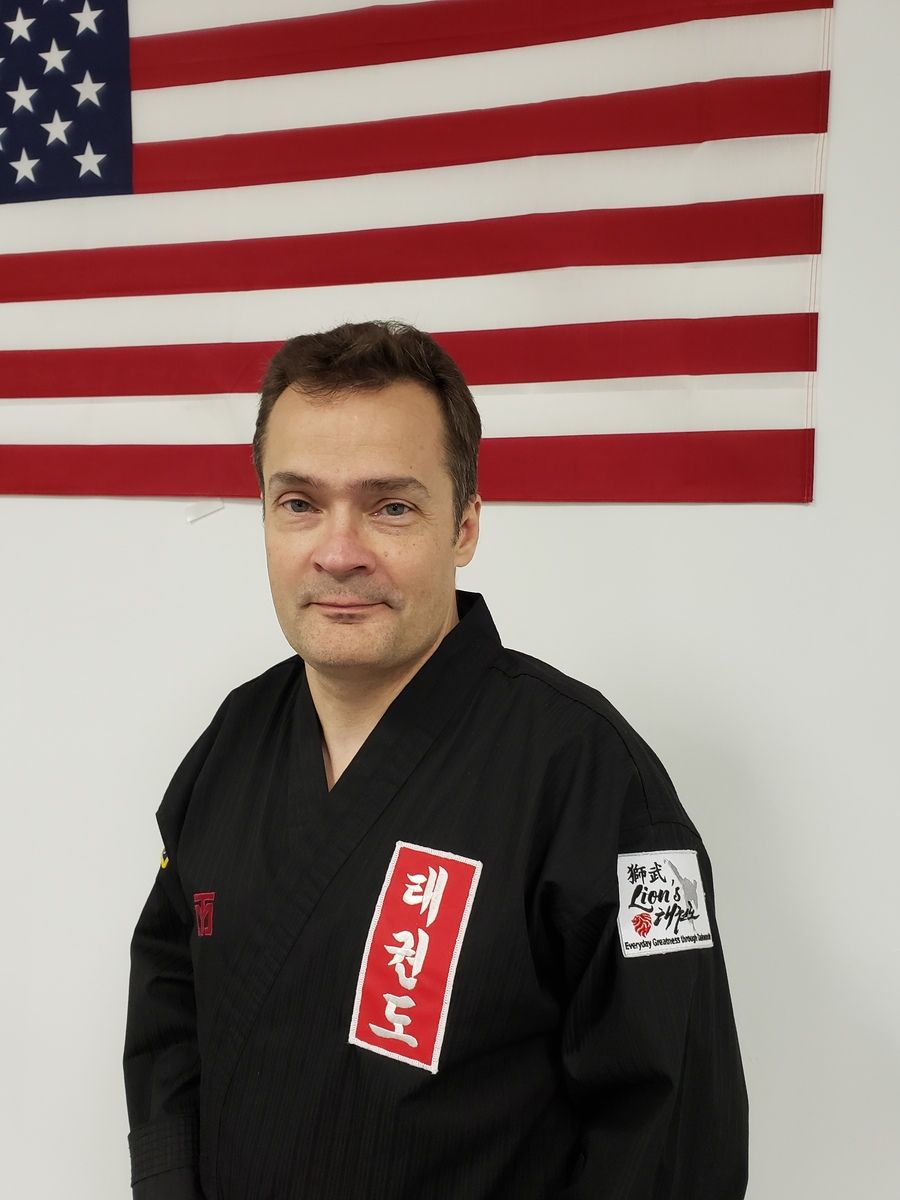
Hi and welcome,
I'm Master Frank, owner of Lions Panzek Martial Arts in Winfield, Illinois.
Martial arts students spend a lot of time learning how to react quickly.
Block.
Move.
Counter.
Go.
But there's another kind of reaction we work on that may be even more important.
Learning when NOT to react.
Someone cuts in front of you.
A classmate says something you don't like.
You lose a game.
Your brother touches the thing you specifically told him not to touch approximately 2,547 times.
You get frustrated.
And suddenly your brain says:
DO SOMETHING!
Preferably immediately.
That's where one of the most valuable lessons in martial arts begins.
Feelings Aren't Instructions
Children sometimes need help understanding something adults occasionally forget too:
Feeling something doesn't mean we have to act on it.
You can be angry without yelling.
You can be frustrated without quitting.
You can be disappointed without blaming someone.
You can be nervous without running away.
The feeling is real.
But there's a small space between the feeling and what we do next.
Learning to use that space is called self-control.
And like almost everything else we teach in martial arts, it takes practice.
Self-Control Isn't Being Quiet
Sometimes people misunderstand self-control.
They think it means children should never get angry.
Or upset.
Or frustrated.
That's not realistic.
I don't want students pretending they don't have feelings.
I want them learning what to do with those feelings.
There's a big difference.
A student might say:
"I'm really frustrated right now."
Good.
They recognized it.
Now we can work with it.
Take a breath.
Reset.
Ask for help.
Try again.
Walk away if necessary.
Those are skills.
And skills get better with practice.
The Three-Second Black Belt
Here's something families can practice at home.
When emotions start climbing, try creating a three-second pause before responding.
Just three seconds.
Breathe.
One.
Two.
Three.
Then decide what happens next.
It sounds almost ridiculously simple.
Until you're angry.
Then three seconds can feel approximately as long as a black belt test.
But that tiny pause gives the thinking part of the brain a chance to catch up with the emotional part.
And sometimes that's enough to change what happens next.
Why We Practice This in Martial Arts
Think about sparring.
A student who reacts emotionally to everything their partner does usually doesn't perform very well.
They rush.
They lose control.
They forget technique.
They make poor decisions.
A calmer student observes.
They breathe.
They choose.
That's real martial arts.
Control isn't simply knowing how to kick.
It's knowing when to kick.
And, more importantly, knowing when not to.
The same principle applies outside the dojang.
A Better Question After a Difficult Moment
When a child loses their temper, adults naturally focus on what went wrong.
"Why did you do that?"
Unfortunately, children often don't have a particularly sophisticated answer.
Usually it's some variation of:
"I don't know."
And sometimes they really don't.
Try asking something different:
"What could you do during those three seconds next time?"
Now we're looking forward instead of backward.
Maybe the answer is:
Take a breath.
Walk away.
Ask an adult for help.
Use words.
Count to three.
Those become tools they can actually use the next time the feeling shows up.
Because it will show up again.
That's part of being human.
Different Students Need Different Tools
Self-control doesn't look exactly the same for every child.
One student may need a quiet breath.
Another may need movement.
Another may need a little extra processing time.
A student with sensory, communication, attention, or other challenges may need completely different strategies.
That's okay.
The goal isn't to make every child respond the same way.
The goal is to help each child discover strategies that allow them to stay in control.
That's an important distinction.
A Challenge for This Week
Pick one phrase your family can use when emotions begin taking over.
Something simple:
"Take three."
That's it.
It isn't punishment.
It isn't criticism.
It's a reminder:
You have three seconds.
Breathe.
Think.
Choose.
Parents can use it too.
Actually...
Parents should probably use it too.
Children tend to notice when the rules mysteriously apply only to them.
Final Thought
We often think strength means doing something.
Sometimes strength means choosing not to.
Not saying the hurtful thing.
Not throwing the object.
Not immediately responding.
Not allowing one difficult moment to decide what happens next.
That's self-control.
And there's something I want every student to eventually understand:
You cannot always control what happens to you.
You can learn to control what you do next.
That's not just a martial arts skill.
That's a life skill.
And unlike a high kick, it's one you'll probably still be using when you're 80.
See you on the mat,
Master Frank
Lions Panzek Martial Arts
27W239 Geneva Rd.
Winfield, IL 60190
(630) 797-6698
www.panzek.com
Confidence Is the Best School Supply™
The new school year brings new teachers, new classmates, new expectations—and sometimes new frustrations.
Martial arts gives children a positive place to practice confidence, focus, discipline, respect, and self-control before those skills are needed in the bigger moments.
Our August Back-to-School Special is available through August 31.
New students receive:
🥋 2 Weeks of Martial Arts Classes FREE
🥋 FREE Uniform