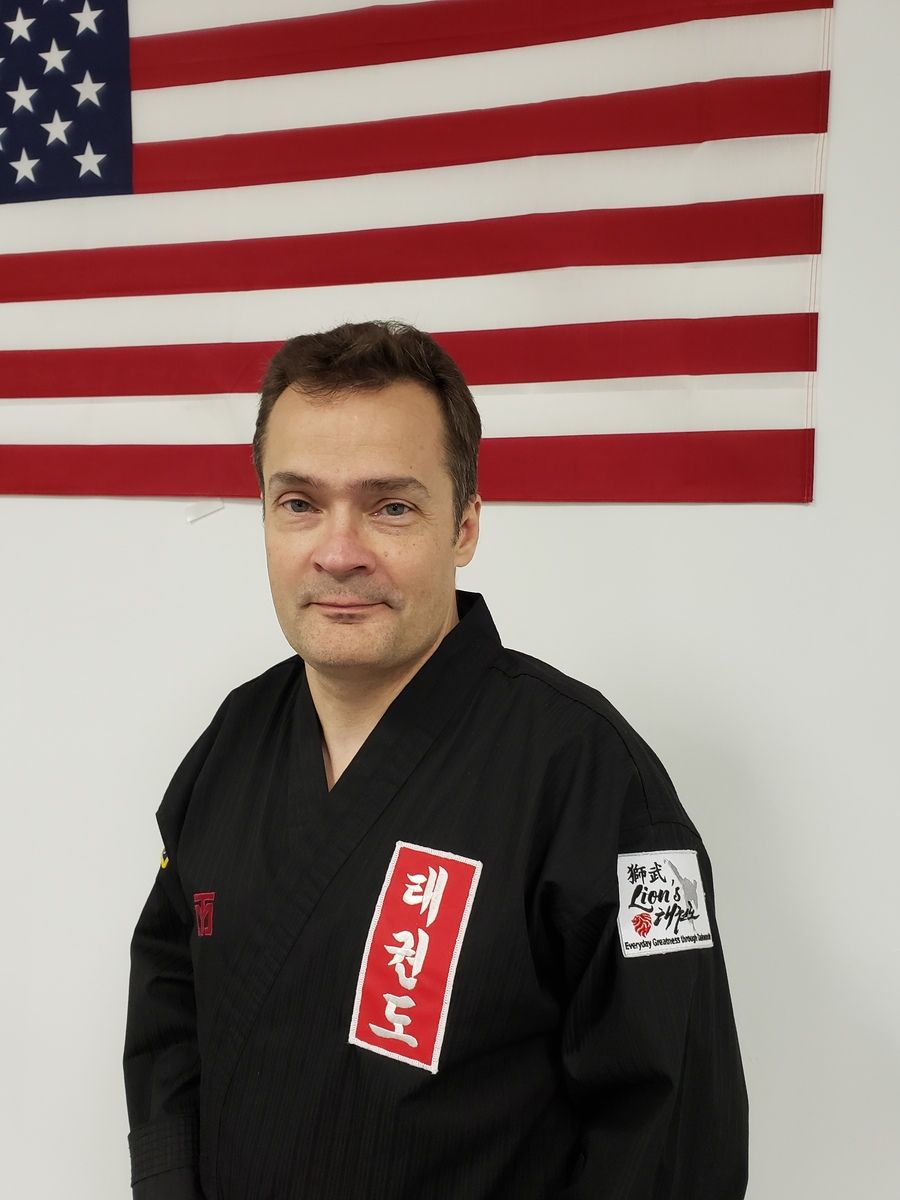
Hi and welcome,
I'm Master Frank, owner of Lions Panzek Martial Arts in Winfield, Illinois.
There are two very different ways to get children to behave.
The first is simple:
Stand there and watch them.
Amazing, isn't it?
Suddenly the shoes get put away.
The line gets straighter.
The homework gets done.
The student who was talking two seconds ago develops an intense interest in standing quietly at attention.
Apparently, adult eyesight has extraordinary powers.
But eventually we have to leave the room.
And that's when a much more important question appears:
What happens when nobody is watching?
That's where character begins.
Rules and Character Aren't the Same Thing
Rules are important.
We have plenty of them in martial arts.
Don't misuse techniques.
Show respect.
Take care of your equipment.
Listen while someone else is speaking.
Train safely with your partner.
Rules establish expectations.
But rules alone don't create character.
A child can follow every rule because they're afraid of getting caught.
That's compliance.
Character is when the child begins making the right choice because they understand why it is right.
That's a much bigger goal.
The Instructor Turns Around
Here's a simple example from the dojang.
An instructor gives students something to practice and then walks across the room to help someone else.
What happens next?
One student keeps practicing.
Another slows down a little.
Someone else suddenly discovers that their training partner is extremely interesting to talk to.
And occasionally a student apparently decides class has officially ended.
That's normal.
They're children.
But over time, something changes.
Students begin understanding:
I'm not practicing because Master Panzek is watching me.
I'm practicing because I came here to improve.
Now we're getting somewhere.
Integrity Takes Practice
We often describe integrity as:
Doing the right thing even when nobody is watching.
I like that definition.
But there's another part we sometimes forget.
Integrity takes practice.
We shouldn't expect children to magically develop it one day.
They develop it through hundreds of small decisions.
Do I tell the truth even though I might get in trouble?
Do I return something that isn't mine?
Do I admit I made the mistake?
Do I follow the rule when the teacher leaves the room?
Do I treat the new student kindly when no adult is standing nearby?
None of those decisions seem enormous.
But together, they build character.
Praise the Choice, Not Just the Outcome
Sometimes the best character-building moments happen quietly.
Your child returns something they found.
They admit they broke something before you discover it.
They help someone without being asked.
They follow through on a responsibility when you weren't there to remind them.
Those moments deserve attention.
Instead of simply saying:
"Good job."
Try:
"I noticed you did the right thing even though nobody was making you do it."
Now you've identified exactly what you're proud of.
You're telling them:
That choice matters.
What Happens When They Make the Wrong Choice?
Because they will.
So will we.
Character isn't never making a bad decision.
It's what happens after one.
Can we admit it?
Can we take responsibility?
Can we make it right?
Can we choose differently next time?
That's why I don't want students believing that good character means pretending to be perfect.
Nobody is.
Good character means being willing to correct your course when you get off track.
Martial artists understand this.
If your stance is wrong, adjust it.
If your technique is wrong, fix it.
If your decision is wrong...
same principle.
This Matters Even More as Children Grow
When children are little, adults control much of their world.
We know where they are.
Who they're with.
What they're doing.
Then gradually, that changes.
They go to school without us.
They visit friends.
They get phones.
They go online.
Eventually they drive.
Go to college.
Get jobs.
Build lives of their own.
We cannot supervise our children forever.
And we shouldn't.
The long-term goal isn't raising children who behave when we're present.
It's raising people who can make good decisions when we're not.
Every Student's Path Looks Different
This lesson also needs room for individual differences.
Some students need clearer expectations.
Some benefit from visual reminders or routines.
Some need more time and repetition before a behavior becomes independent.
That's okay.
Independence doesn't have a deadline.
We meet students where they are and help them take the next step.
The goal remains the same:
Move from someone else managing my choices toward me learning to manage my own choices.
That's growth.
A Family Challenge This Week
Try catching your child doing something right when they don't realize you're watching.
Not something spectacular.
Something ordinary.
Maybe they put something away.
Maybe they were kind to a sibling.
Yes, apparently this does occasionally happen.
Maybe they told the truth.
Maybe they helped someone.
Maybe they followed through without being reminded.
Then tell them:
"I saw what you did."
And explain why it mattered.
Those small moments reinforce a powerful message:
Who you are matters even when nobody is keeping score.
Final Thought
Belts are visible.
Trophies are visible.
Grades are visible.
Character usually isn't.
It shows up in quiet decisions.
In empty rooms.
In conversations parents never hear.
In choices instructors never see.
That's why one of the greatest things a parent or instructor can eventually say about a child isn't:
"They behave when I'm around."
It's:
"I trust them when I'm not."
That's what we're working toward.
Not perfect children.
Not children who never make mistakes.
Young people who gradually learn to make good choices because those choices have become part of who they are.
Because someday nobody will be standing over their shoulder.
And when that day comes, we want the lessons to still be there.
See you on the mat,
Master Frank
Lions Panzek Martial Arts
27W239 Geneva Rd.
Winfield, IL 60190
(630) 797-6698
$49 September Special
Confidence.
Discipline.
Respect.
Integrity.
Those aren't things children learn from a lecture.
They develop them by practicing them.
At Lions Panzek Martial Arts, every class gives students opportunities to make decisions, overcome challenges, help others, accept responsibility, and become a little more capable than they were before.
And right now, new students can get started with our:
$49 September Special
🥋 Beginner-friendly martial arts instruction
🥋 Programs for children ages 5+
🥋 Lion Cubs for ages 3–4
🥋 Dedicated instruction for individuals with special needs
🥋 A positive, welcoming environment where every student can grow
If you've been wondering whether martial arts might be right for your child, September is a great time to find out.