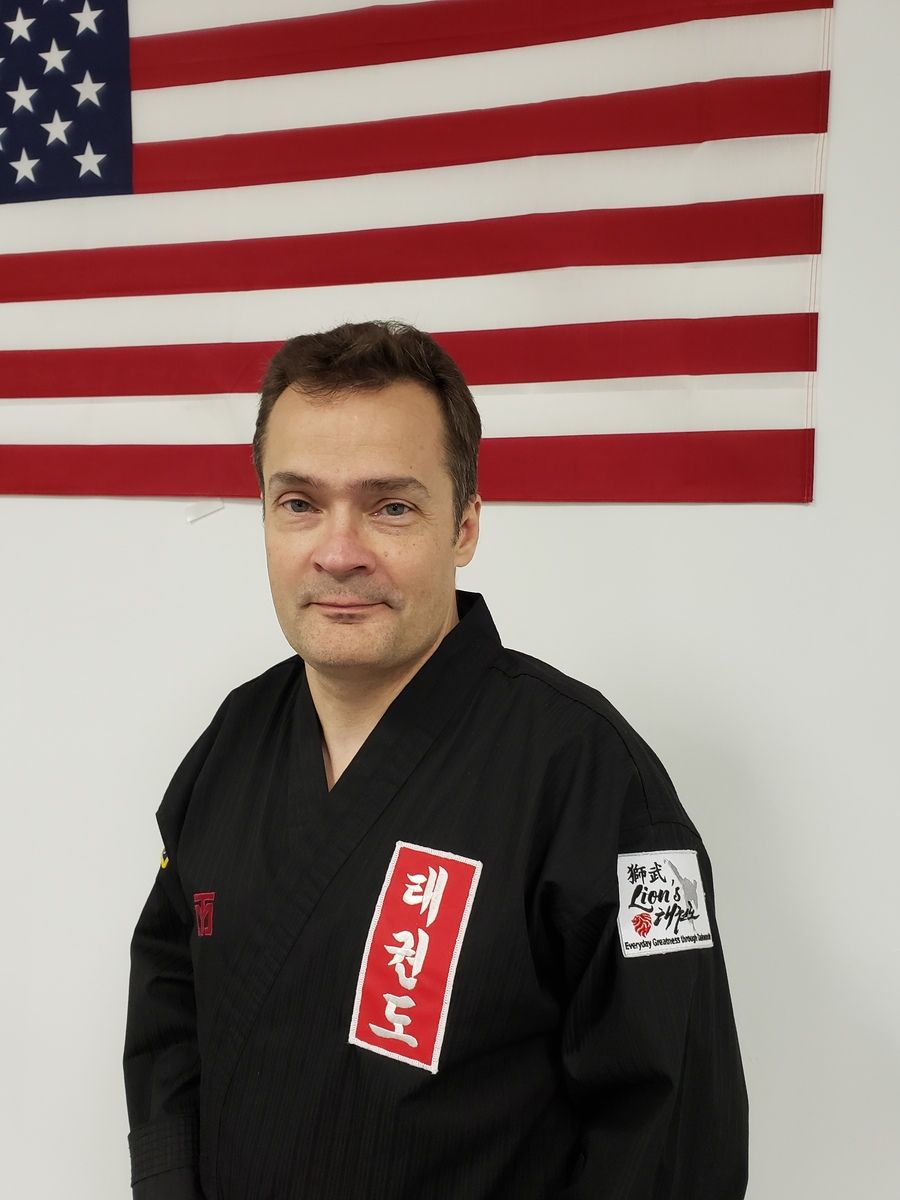
Hi and welcome,
I'm Master Frank, owner of Lions Panzek Martial Arts in Winfield, Illinois.
Every martial arts school has exciting days.
Testing days.
Board breaking days.
Promotion ceremonies.
Special events.
The days when students come through the door bouncing off the walls with excitement.
Those days are fun.
But if I'm being honest, some of the most important growth happens on completely ordinary days.
The kind of day when nobody seems particularly excited.
The kind of day when students drag their feet a little.
The kind of day when everyone would rather be doing something else.
Those are the days that teach commitment.
Excitement Is Easy
Most people enjoy doing things when they're excited.
Children are no different.
When something is new, exciting, or rewarding, participation comes naturally.
The challenge comes when the excitement wears off.
That's when many children begin asking themselves questions like:
"Do I really want to go today?"
"Do I have to practice?"
"Can I skip just this once?"
Those moments are completely normal.
In fact, they're part of nearly every worthwhile activity.
School.
Sports.
Music lessons.
Exercise.
Work.
Even hobbies.
The difference between people who achieve their goals and people who don't is often what happens after the excitement fades.
Parents often enroll children because they want them to gain confidence, focus, discipline, or self-defense skills.
And those are all wonderful goals.
But there is another benefit that often goes unnoticed.
Martial arts teaches children how to keep commitments.
Not because they always feel like it.
Because they learn to do it even when they don't.
That's a skill that becomes incredibly valuable later in life.
A student who learns to show up for class consistently is practicing something much bigger than martial arts.
They're practicing reliability.
They're practicing responsibility.
They're practicing keeping their word.
The Difference Between Feelings and Decisions
One lesson I hope every student learns is this:
You don't have to feel like doing something in order to do it.
That may sound simple, but it's powerful.
Children often assume that feelings should determine actions.
If they feel motivated, they participate.
If they don't feel motivated, they stop.
Life doesn't work that way.
Adults know this.
There are plenty of mornings we don't feel like getting up.
Plenty of days we don't feel like exercising.
Plenty of evenings we don't feel like doing chores.
And yet somehow the dishes still need washing.
The bills still need paying.
And the lawn stubbornly continues growing whether we're motivated or not.
Learning to act despite temporary feelings is one of the foundations of maturity.
What We See on the Mat
Sometimes a student arrives looking tired.
Maybe they had a rough day at school.
Maybe they're frustrated about something.
Maybe they'd rather be home.
Then something interesting happens.
Class begins.
They start moving.
They interact with their classmates.
They focus on a challenge.
They laugh.
They learn.
And by the end of class, they're glad they came.
Not every time.
But often enough that I've learned an important lesson:
Children are not always the best predictors of what will make them feel better.
Again, if we're honest, adults aren't either.
A Simple Parent Strategy
The next time your child says:
"I don't feel like going."
Try acknowledging the feeling without turning it into a decision.
You might say:
"I understand. Sometimes I don't feel like doing things either."
Then follow with:
"Let's go anyway and see how you feel afterward."
Notice what's happening.
You're not arguing.
You're not dismissing their feelings.
You're simply teaching them that feelings and commitments can exist at the same time.
That's an important life lesson.
The Students Who Go the Furthest
After years of teaching, I've noticed something.
The students who succeed the most are not necessarily the most talented.
They're not always the fastest learners.
They're not always the strongest athletes.
They're often the students who simply keep showing up.
Week after week.
Month after month.
Year after year.
They understand that progress is built through consistency.
And consistency is built through commitment.
Final Thought
Character isn't built on the days when everything is easy.
It's built on the ordinary days.
The days when motivation is low.
The days when progress feels slow.
The days when nobody feels particularly inspired.
Those are the days that teach children how to keep going.
And when children learn to keep going, even when they don't feel like it, they gain something far more valuable than a new technique.
They gain the ability to trust themselves.
And that's a skill that will serve them long after they've earned their next belt.
See you on the mat,
Master Frank
Lions Panzek Martial Arts
Winfield, Illinois
WWW.PANZEK.COM
Help Your Child Build Confidence, Discipline, and Lifelong Character
At Lions Panzek Martial Arts, students learn more than martial arts techniques.
They learn perseverance, respect, focus, responsibility, and the value of showing up even when things are difficult.
Whether your child is shy, energetic, struggling with confidence, or simply looking for a positive challenge, we're here to help.
📍 Lions Panzek Martial Arts
27W239 Geneva Rd, Winfield, IL
📞 (630) 797-6698
🌐 WWW.PANZEK.COM
Helping to make you the best you possible.