Hi and welcome,
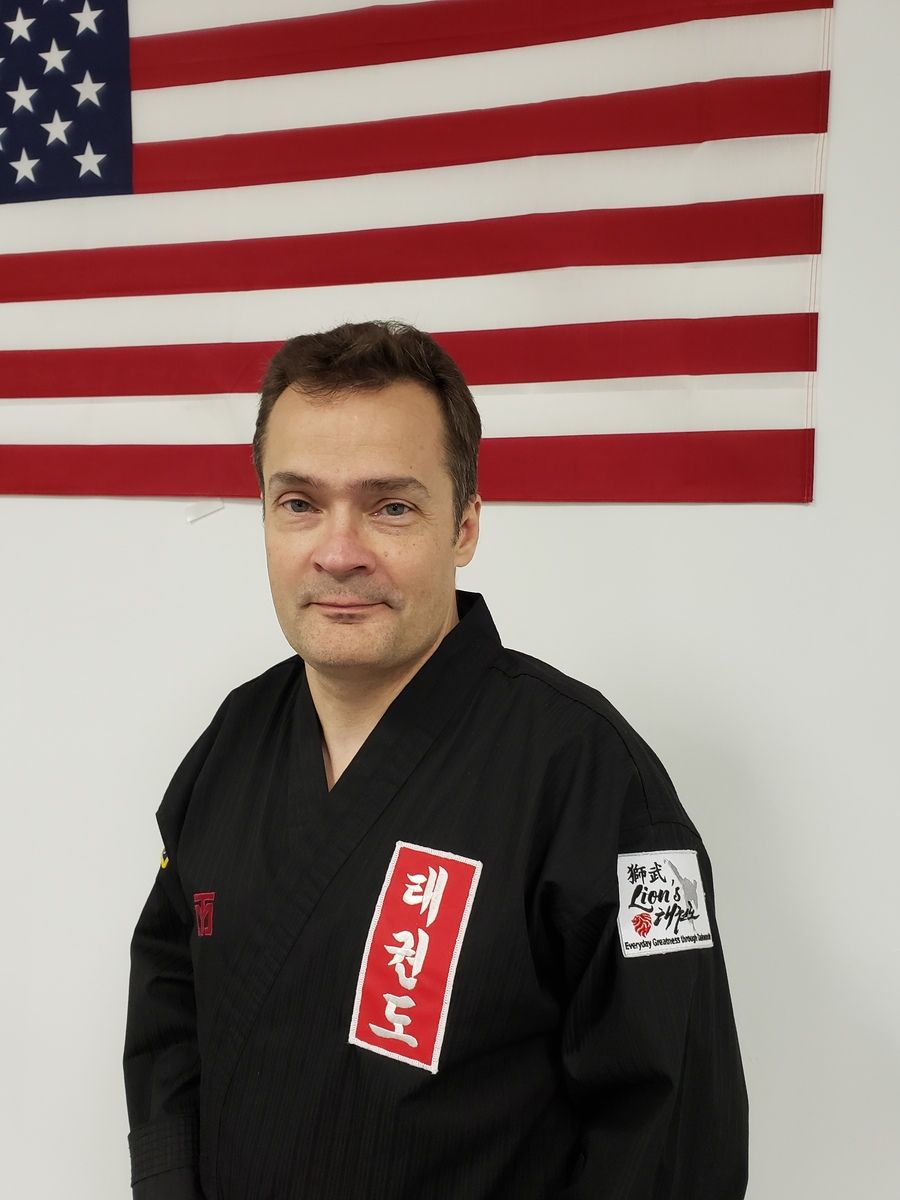
I'm Master Frank, owner of Lions Panzek Martial Arts in Winfield, Illinois.
There's something interesting about martial arts.
At first glance, it looks like a very individual activity.
Your belt.
Your form.
Your technique.
Your test.
Your progress.
But spend enough time in a dojang and you discover something:
Nobody gets very far alone.
We need instructors.
We need classmates.
We need people to hold targets.
We need partners to practice with.
We need someone willing to attack us repeatedly so we can practice self-defense.
Which, when you put it that way, is a rather unusual basis for friendship.
But it works.
And somewhere along the way, students learn an important lesson:
Part of becoming better is helping the person beside you become better too.
A Good Partner Isn't Just a Body Holding a Target
If you've watched martial arts class, you've probably seen students pair up.
One holds the target.
The other kicks.
Seems simple.
But there's a right way to be a partner.
Hold the target correctly.
Pay attention.
Give your partner enough resistance to make the technique realistic, but not so much that you're trying to prove something.
Encourage them.
Help them reset.
Then switch.
A student who isn't paying attention makes it harder for their partner to learn.
A student who is engaged makes both of them better.
That's teamwork hiding inside an individual pursuit.
Your Job Changes Depending on Who Is Beside You
This becomes even more important when students have different abilities.
An advanced student working with a beginner shouldn't be thinking:
"How can I show this person how good I am?"
They should be thinking:
"How can I help this person succeed?"
The same is true when students are different sizes, ages, or abilities.
Being a good training partner means adjusting.
Sometimes you go faster.
Sometimes you slow down.
Sometimes you challenge your partner.
Sometimes you give them a little more time.
That's not lowering expectations.
That's understanding what the person beside you needs in order to grow.
And that's a pretty useful skill outside the dojang too.
You Don't Have to Be the Instructor
Now, there's a danger here.
Every martial arts instructor has probably watched one student suddenly promote themselves to assistant master instructor.
Their partner makes one tiny mistake and immediately:
"No, no, no. You're doing it wrong. You're supposed to—"
Meanwhile, the actual instructor is standing approximately six feet away.
We appreciate the enthusiasm.
But being a good partner doesn't mean correcting everything another student does.
Sometimes your job is simply to hold the target.
Sometimes it's to encourage them.
Sometimes it's to let the instructor teach.
Knowing when to help is part of learning how to help.
That's a lesson some adults could probably use too.
The Better Your Partner Gets, the Better You Get
Here's something I want students to understand:
Helping another student improve doesn't take anything away from you.
It actually helps you.
If your sparring partner becomes better, you have to improve.
If your partner holds better targets, you can practice better technique.
If your classmates become stronger, the entire class becomes stronger.
Someone else's progress isn't a threat to yours.
Their growth can contribute to your growth.
That's a very different way to look at success.
This Lesson Goes Far Beyond Martial Arts
Think about the environments our children will spend their lives in.
School projects.
Sports teams.
Clubs.
Eventually, workplaces.
Families.
Communities.
They will constantly find themselves working with people who think differently, learn differently, communicate differently, and have different strengths.
Being the smartest person in the group won't always be enough.
Being the strongest won't either.
People remember the person who made the group better.
The person who listened.
The person who encouraged others.
The person who did their share.
The person who helped without taking over.
The person others actually wanted on the team.
That's leadership long before anyone gives you a title.
Parents Can Watch for This Too
When we ask children about an activity, we naturally focus on them.
"How did you do?"
"Did you get your stripe?"
"Did you win?"
There's nothing wrong with those questions.
But occasionally try asking:
"Did you help anyone today?"
Or:
"Were you a good partner?"
Now we're expanding the definition of success.
We're teaching children that their experience isn't only about what they received.
It's also about what they contributed.
A Challenge for This Week
Here's a simple question for the whole family:
"Did I make the people around me better today?"
Not:
"Did I fix everybody?"
Please don't.
That's an entirely different newsletter.
Just:
Did I contribute something positive?
Maybe you encouraged someone.
Helped without being asked.
Listened.
Shared what you knew.
Gave someone a chance.
Made someone's job a little easier.
Those are small things.
But groups become strong when enough people start doing them.
Final Thought
Martial arts teaches us to become stronger individuals.
But strength isn't only about what we can accomplish by ourselves.
Eventually, I want our advanced students to understand that they have another responsibility.
Help raise the level of the room.
Train hard.
Expect the best from yourself.
But when you hold the target, hold it well.
When someone struggles, encourage them.
When a beginner needs a partner, be the person willing to work with them.
When you know more, remember that you once knew less.
Because someday people may forget how high you could kick.
They may forget what place you took at a tournament.
They may even forget exactly what belt you wore.
But they'll remember whether they enjoyed training with you.
Become the kind of person who makes the people around you better.
That's a pretty good goal in the dojang.
And an even better one in life.
See you on the mat,
Master Frank
Lions Panzek Martial Arts
27W239 Geneva Rd.
Winfield, IL 60190
(630) 797-6698
www.panzek.com
Want to Learn More About Lions Panzek Martial Arts?
At Lions Panzek Martial Arts, we teach kicks, blocks, forms, and self-defense—but the lessons don't stop there.
We're helping students develop confidence, discipline, respect, teamwork, leadership, and the ability to bring out the best in themselves and the people around them.
We offer programs for:
🥋 Children ages 5+
🥋 Lion Cubs ages 3–4
🥋 Individuals with special needs
Every student starts somewhere, and every student deserves the opportunity to grow.
Check out our latest special off CLICK HERE